Precious Metals insight: Palladium struggles as jewellery metal due to surge in prices
11 Feb 2020

Palladium, which now costs far more than gold, is losing its allure in the bridal market. Rival metal platinum is seen as benefiting from a prolonged boom in palladium pricestriggered by rising industrial demand and supply tightness, which has contributed to a sharp drop in hallmarking of palladium items. David Brough reports.
February 2020 – A prolonged rally in palladium prices, driven by industrial demand, has eroded the metal’s appeal in the men’s wedding ring market, with UK retail jewellers increasingly pushing platinum and other metals.
The slide in platinum prices to well below the gold price has catapulted demand for platinum engagement rings and wedding bands, and knocked palladium out of contention, UK retail jewellers say.
Platinum traded in February at more than a third less than gold prices -- and less than half the price of palladium.
Spot palladium was trading on February 10 at $2,328.42 per ounce, while gold was $1,570.64 per ounce and platinum was $969.20 per ounce.
Palladium is used mainly in industrial applications rather than jewellery: its price has benefited from its inclusion in catalytic converters in petrol-powered vehicles, which are seeing growth in part due to a shift away from diesel.
The main reason for the slide in platinum prices has been due to falling demand for its main industrial use in catalytic converters for diesel-powered vehicles, which have declined in popularity because of environmental concerns.
UK manufacturers and jewellers said sales of platinum bridal rings have increased, aided by the price discount to gold and palladium and a commonly held view that platinum is a better- quality precious jewellery metal than palladium.
Stuart Wibberley, Sales Director from Cooksongold said,
“From the supply-side palladium as a metal was in gradual decline throughout 2019, a direct result of the higher and more volatile price. In 2020 we've seen continued change with an acceleration of customers focusing more on platinum, with many customers now exiting palladium completely. We, in turn, have had to react quickly, reflecting this increased demand in our stocks of basic platinum items such as grain, sheet, wire, alongside ring blanks."
Gold and palladium saw a decline in the quantity of articles hallmarked in 2019, but platinum saw an increase, according to the London Assay Office.
Total palladium items hallmarked were down a whopping 47.0 percent year-on-year, while total platinum items hallmarked were up 8.0 percent. Total gold items hallmarked were down 3.5 percent.
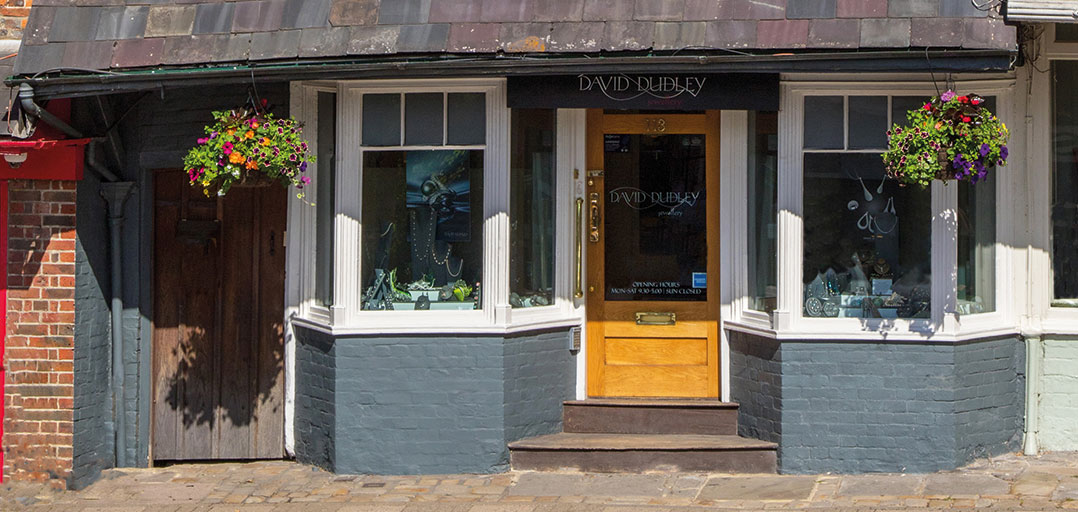
Image: David Dudley Jewellers in Malborough. Credit Kingfisher guides.
Palladium in Jewellery Design
Despite the recent sharp fall in demand, palladium has many strengths as a jewellery metal.
Luxury jewellers such as Stephen Webster and Vivienne Westwood have included palladium pieces in their collections.
Palladium is light, strong and white - it’s a question of how you communicate that to the public, retail jewellers say.
“Customers don’t tend to know about palladium, so we tend to offer it to them,” said David Dudley of NAJ member David Dudley Jewellers in Marlborough.
“Palladium tends to appeal to ‘techie’ men.”
For many years until the palladium price rally, palladium was popular in wedding bands for men because it is lighter and was more affordable than platinum, and it has the advantage over white gold of not requiring any coating.
Retailers, such as Sonny’s Jewellers in the Birmingham Jewellery Quarter, have said that platinum’s discount to gold had propelled demand for platinum engagement rings, compared with 18-carat white gold, and had given yellow gold premium status.
18-carat white gold sometimes incorporates palladium, but palladium is such a tiny part of the whole that the price impact is insignificant, jewellers say.
Gold jewellery was favoured over platinum or palladium by many customers, notably in the British Asian community, because of its attractiveness as an investment, said Manish Jogia, director of Sonny’s Jewellers.
Jewellers doubted whether palladium would be seen as an investment in the same way as gold. Palladium’s recent rally also increases risks that it may be over-bought.
As the value of palladium wedding bands will have risen in the scrap market over the last few years, owners may need to take stock for insurance purposes.
UK jewellers said marketing of palladium had been low key.
The marketing of palladium as a jewellery metal has been led by two organisations rather than one umbrella group, backed by rival mining groups.
The key promoters of palladium in jewellery have been Palladium Alliance International, mainly focused on North America and China, financed by U.S. precious metals miner Sibanye-Stillwater, and the International Palladium Board (IPB), targeting Europe, North America and Asia, supported by Russian nickel and palladium giant Norilsk Nickel (Nornickel).
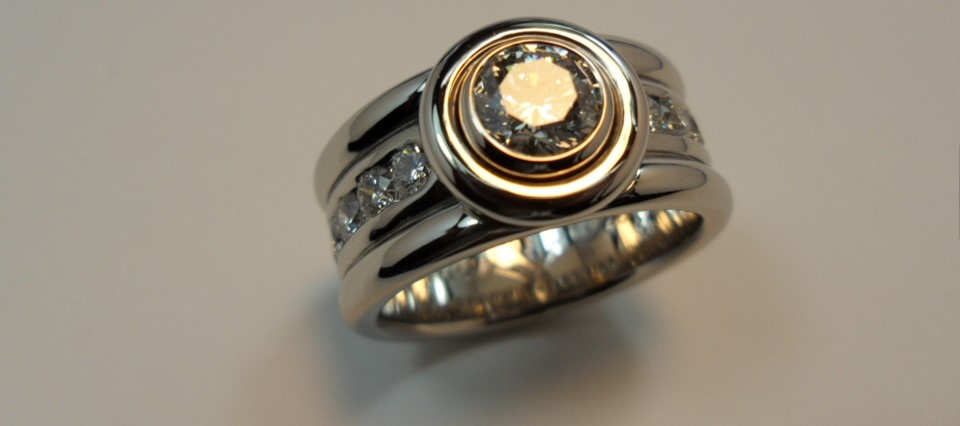
Image: Palladium ring
Platinum gains ground
Retailers, such as PureJewels in east London, said the discount of platinum to gold had facilitated their job to sell platinum engagement bands and wedding rings.
Historically, platinum is associated with prestigious jewellery houses and designers, due to its strength, never-fading white colour and scarcity.
Platinum is preferred for bridal jewellery setting in many markets, and a platinum crown is the securest way to hold a diamond or gemstone.
Platinum Guild International, who have focused their marketing on Asia in recent years, have reported an increase in platinum jewellery sales in some leading markets, supported by the price discount to alternative metals.
UK NAJ member Catherine Jones, a jewellery retailer in Cambridge, has chosen to stock gold and platinum, said managing director Vanessa Burkitt.
“At Catherine Jones of Cambridge, we have shied away from stocking palladium. The price was about the same as 14-carat gold when it was heavily promoted at the time it received its own hallmark,” Vanessa said.
“Now that palladium is more expensive than platinum, we feel that our judgment was well founded and 14-carat gold (which is more than 50% gold) is very much favoured by our customers who want a more modestly-price alternative to 18-carat. They prefer it to 9-carat because it is more than 50% gold. They feel reassured that they are getting a metal they understand.”