Sentimental Jewellery, from the Antique to the Contemporary
06 May 2020
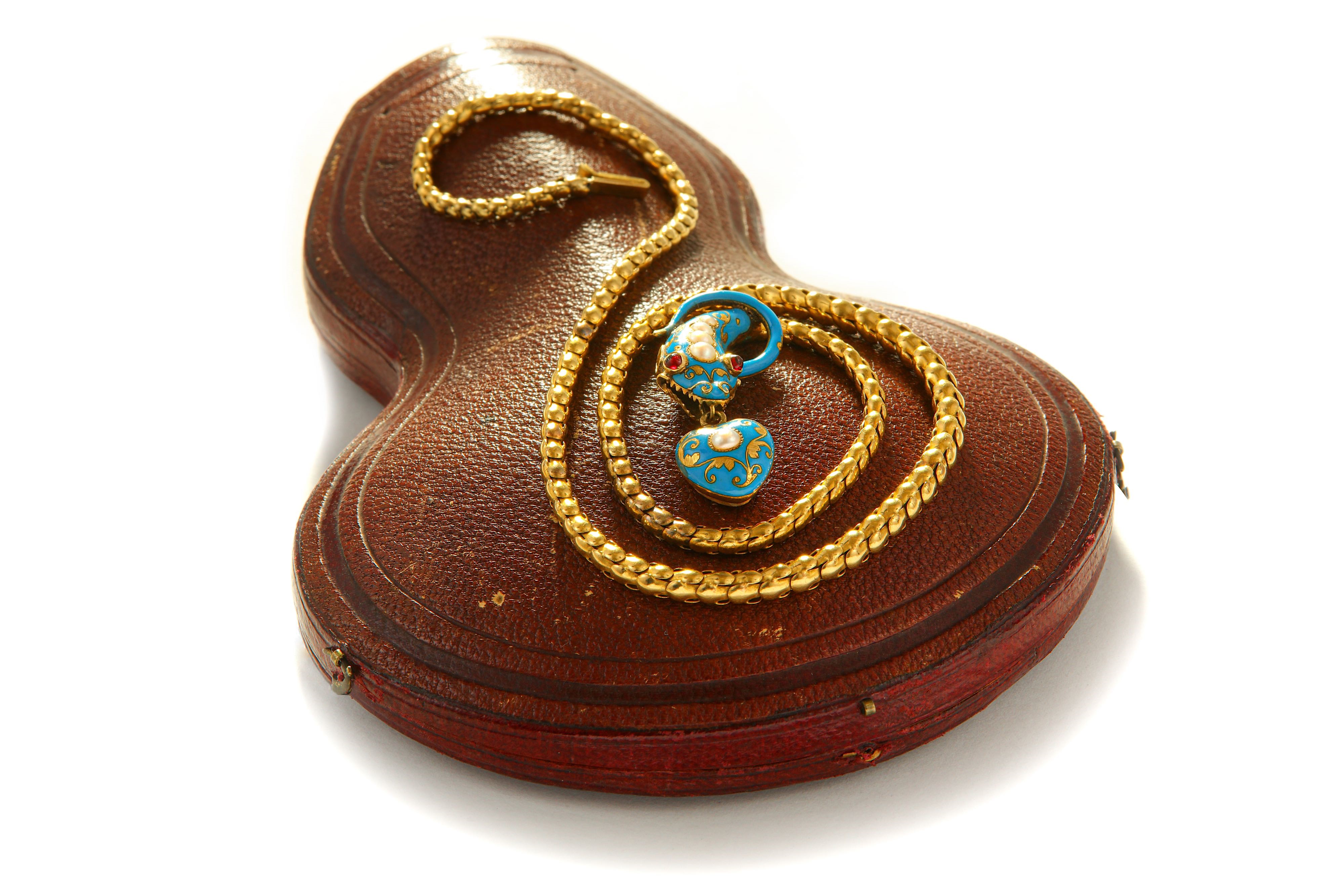
What is sentimental jewellery? In reality, all jewels are sentimental. We bond with a jewel because of what it represents to us, the celebration of an event or a memory of a loved one.
Throughout history, certain jewels were made with a particular sentiment intrinsically part of their identity. Some of the most common examples are mourning jewels or posy rings. These sentimental jewels reached their zenith in the Victorian period through their canny promotion by contemporary jewellers, and we still wear the echo of these jewels even today.
In the late Medieval period, a trend began for simple band rings inscribed with little rhymes or poems. Posies or “little poem” in French, were inscriptions, normally either religious or romantic, on the inside or outside of the bands. Jewellers would keep these rings in stock with typical inscriptions ready to be engraved depending on the sentiment intended. Classic examples were: ‘As gold is pure, so love it pure’, ‘God above increase our love’, or even ‘I long to have but blush to crave’. Although the more lyrical commissioner could have their own message engraved.
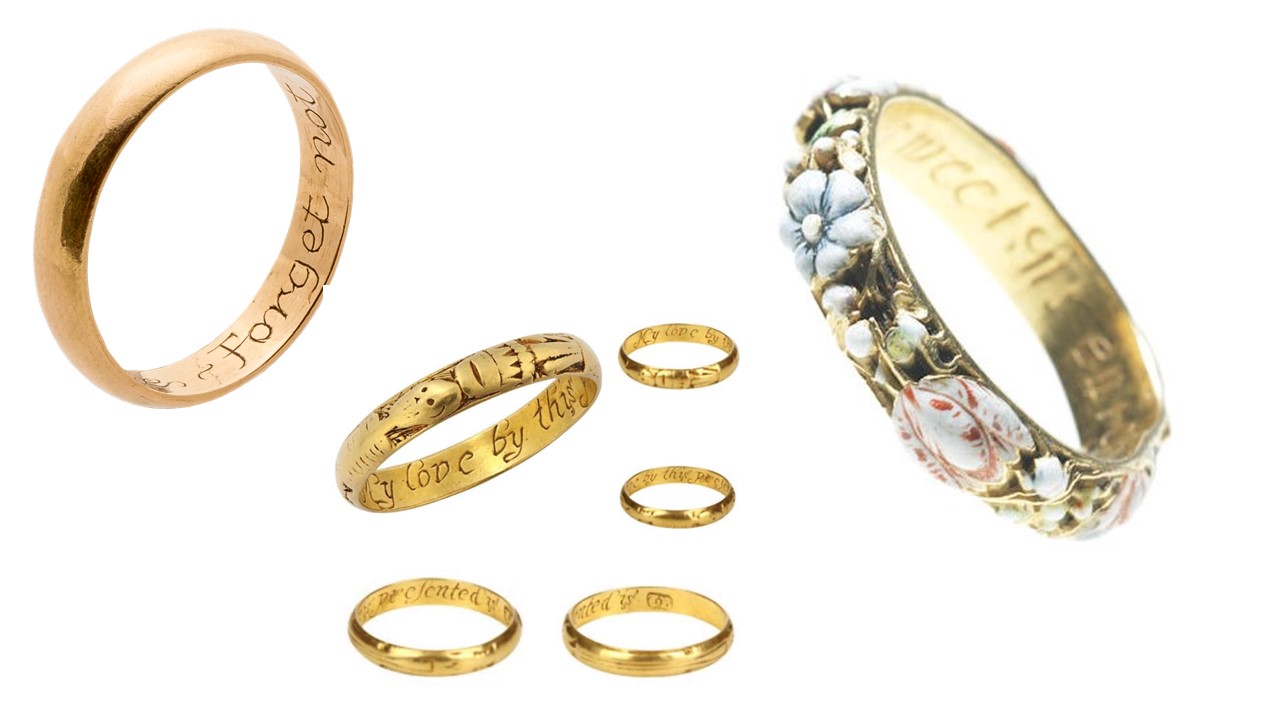
Posy rings were popular for hundreds of years but by the mid-1800s interest was dwindling. The British Hallmarking Law of 1855 required gold items to have a full hallmark and this heralded the end of the posy ring as there simply wasn’t enough space to accommodate the posies. Around the same time, Queen Victoria adopted the Germanic custom of giving her groom a wedding band and started the modern custom of brides and grooms exchanging bands. The simple band of a posy ring was replaced with the sentimental wedding ring we know today.
One type of sentimental jewellery which we sadly no longer see is acrostic jewels. These gem-set jewels were designed to spell out a message through the first letter of the name of each gem. The best know example is the Regard ring. A line of Ruby, Emerald, Garnet, Amethyst, Ruby and Diamond set to relay a simple, affectionate message to the recipient, which they could then convey to the rest of the world while wearing it.
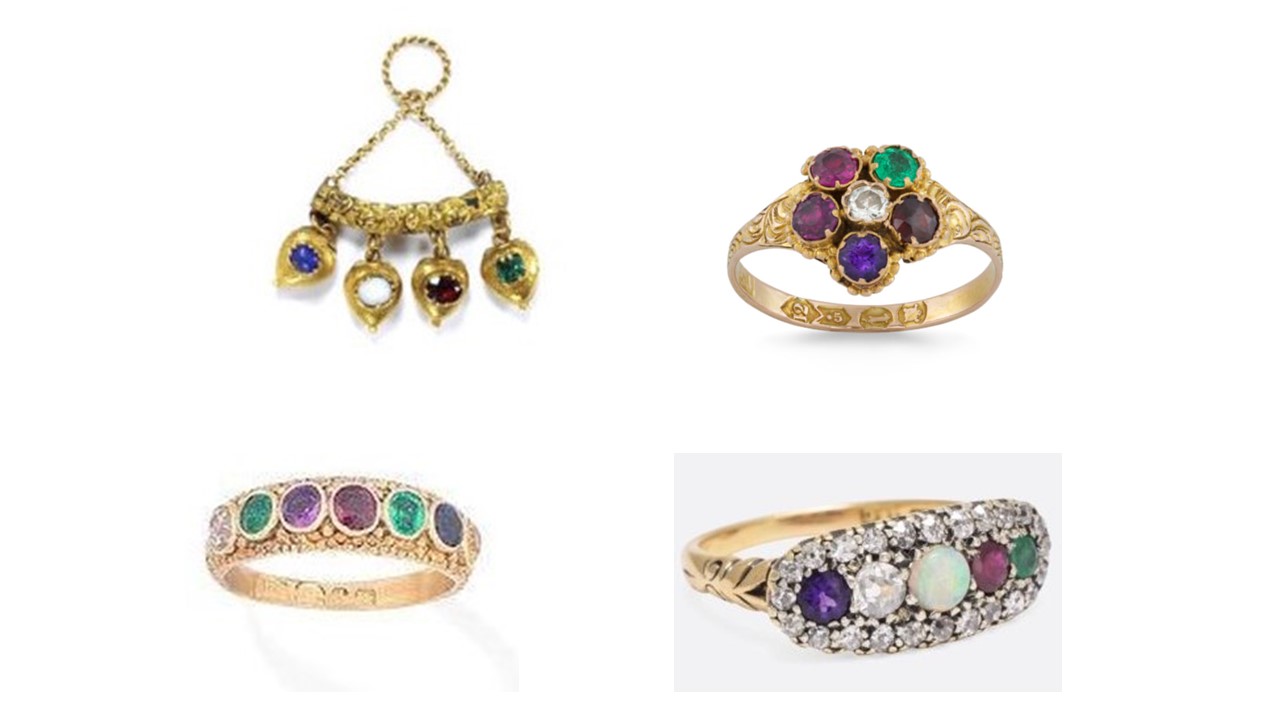
One of the first examples was commissioned by Napoleon’s second wife the Empress Marie Louise (1791-1847). She commissioned three bracelets which spelt out sentimental dates: both her and Napoleon’s birthdays and the dates they met and then married. The words are carefully spelt out using the names of each gemstone set in the bracelets. Simpler examples became widely popular in both the UK and France, particularly throughout the 1830-50s.
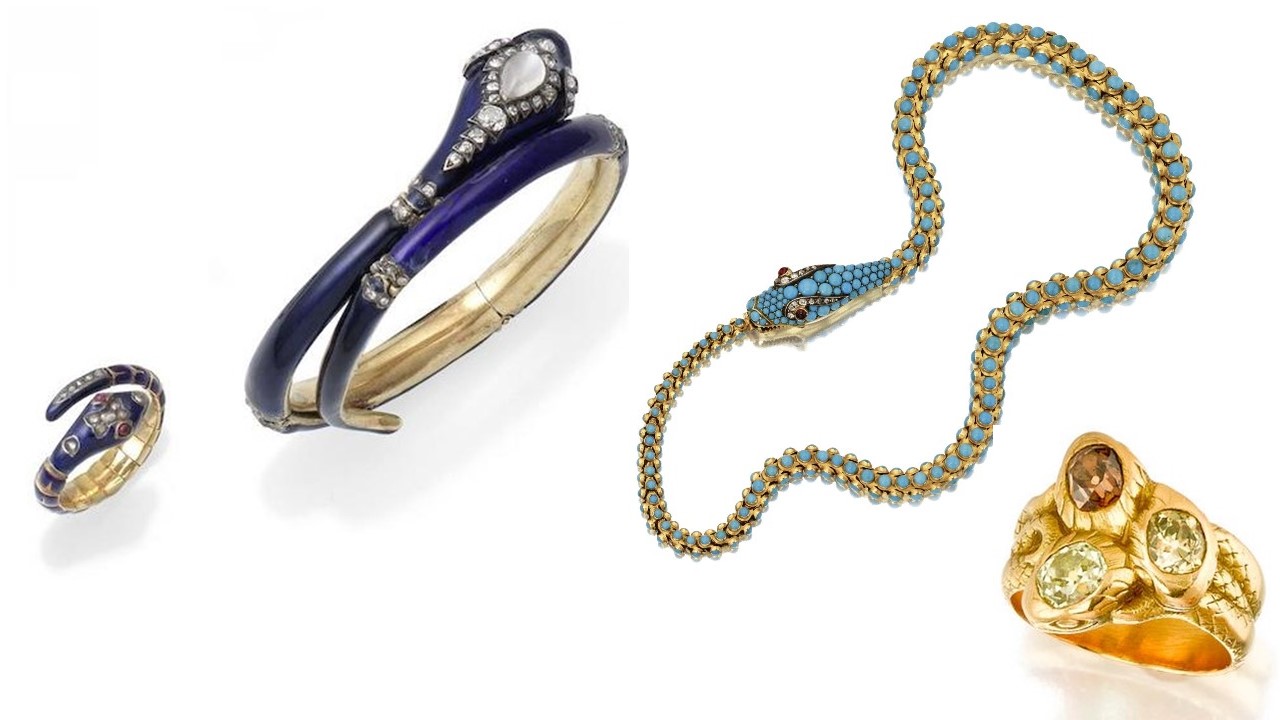
European royalty were the trendsetters of the 19th century and in the UK Queen Victoria and Prince Albert were the star influencers. In 1839 Victoria proposed to Albert, as custom would require, and to mark the occasion Albert gave her a ring designed as a gem-set snake consuming its own tail. This distinctive ouroboros symbol dates back thousands of years to Egyptian iconography. This image of a never-ending circle created by the snake clasping its own tail represents an unbroken line, a symbol of eternity.
From the 1840s onward snakes became hugely popular in Victorian jewellery and were favoured for this devotional sentiment. These jewels were also admired for the complex construction needed to create the sinuous forms wrapped around the wearer’s body. Sadly we don’t know exactly what Queen Victoria’s ring looked like because allegedly she was buried wearing it but the trend was so substantial that examples from the 19th century are still plentiful.
While snakes and acrostic jewels represented the influence of the Romantic movement, the more sobering realities of life in the Victorian period helped bring to the pinnacle of popularity another form of sentimental jewellery, mourning jewels.
These highly personal jewels often made containing the hair of the deceased, were popular throughout the 18th and 19th centuries. When Samuel Pepys died in 1703, he left 123 mourning rings to be handed out in his memory. These jewels developed a language of iconography which became easily recognisable, usually employing black enamel, hairwork, the images of maidens, weeping willows (newly introduced in England around 1730), and shrines.
By the 1850s events such as the Crimean War, the Indian Uprising and the death of both the Queen’s mother and her beloved Prince Albert in 1861 meant that sadly these jewels became widely seen in society. So prevalent was the market for mourning jewels that wealthy mourners even had examples made for their cherished pets.
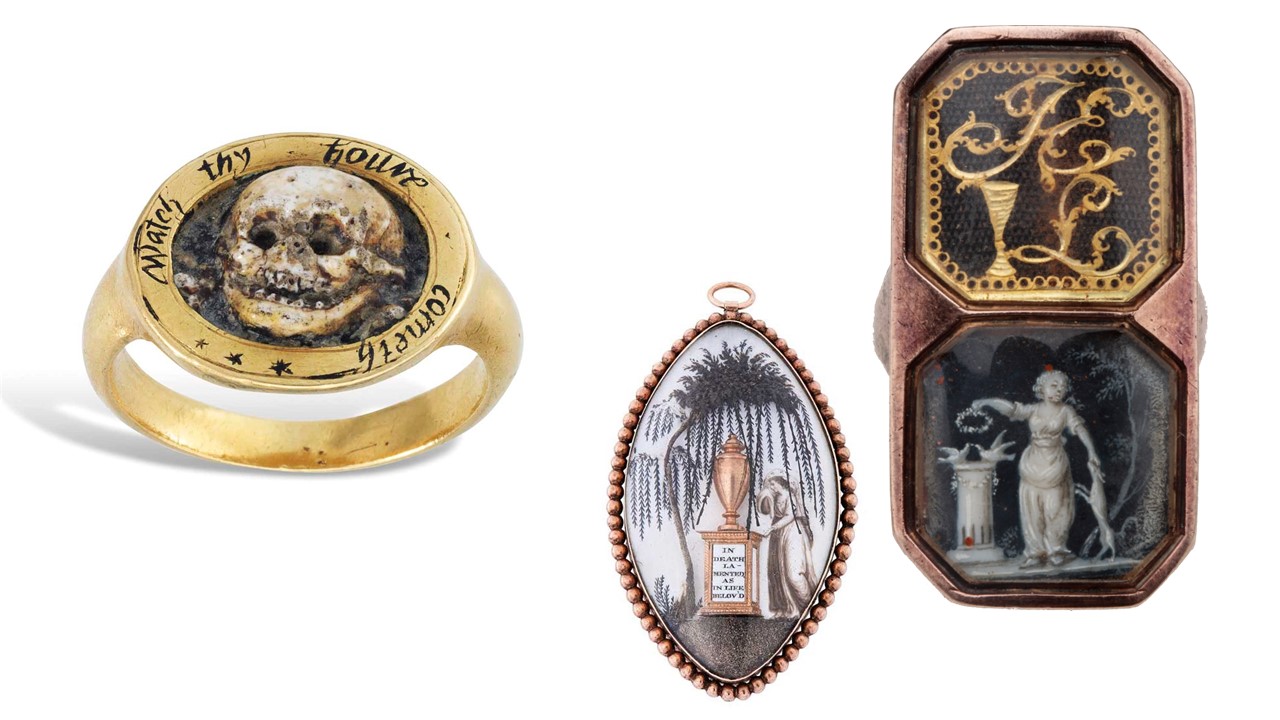
By the mid to late 19th century the trend for mourning jewellery was so well established that simpler versions of the jewels were mass-produced in increasingly industrialised jewellers’ workshops. These large-scale productions used the formulaic iconography of mourning jewels that could then be personalised with hairwork or the name of the deceased engraved on the jewel.
By the dawn of 20th century tastes had changed and mourning jewellery was considered out of fashion. Snake iconography had also started to dwindle in popularity, however soon after, a new jewel is introduced with encompasses the same meaning. In the 1920s the modern eternity ring becomes popular. The same principle of the snake ring is encapsulated in these simple bands, a never-ending line of gemstones reflecting unbroken devotion.
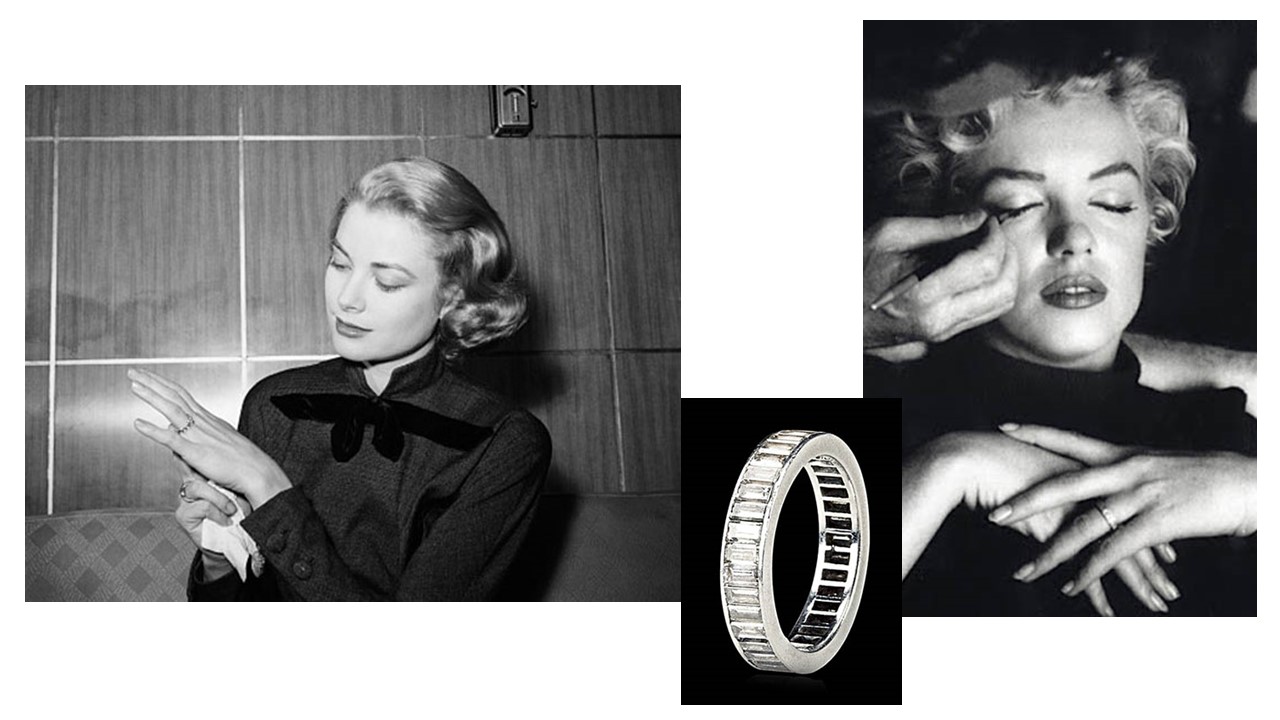
By the 1950s, eternity rings were fully established in their popularity. Indeed, two of Hollywood’s most famous stars, the “royalty of the 20th century” have become closely associated with this jewel. In 1954 Marilyn Monroe married her second husband, the American baseball star Joe DiMaggio. For her wedding band she received a channel-set baguette-cut diamond eternity ring. Two years later Prince Rainer III of Monaco purposed to Grace Kelly with a Cartier ruby and diamond eternity ring. The red and white gems representing the colours of Monaco. These simple bands, set with an unbroken line of diamonds or coloured gems, relayed that sentiment of eternal love just as the snake had 100 years before.
Although jewellers in the 19th century embraced the marketing opportunities which sentimental jewels offered, the trend was not absent in 20th century jewellery. Indeed, arguably the most popular jewel ever made compasses this same idea. The Cartier Love bangle was designed by Aldo Cipullo in 1969 after a late night break-up. Broken-hearted, he went his studio and designed a jewel which couldn’t just be slipped on and off. He created a Spartanly simple bracelet which required an actual screwdriver to put on. Despite being called a Love bracelet, the sentiment that Cipullo wanted to communicate was one of commitment.
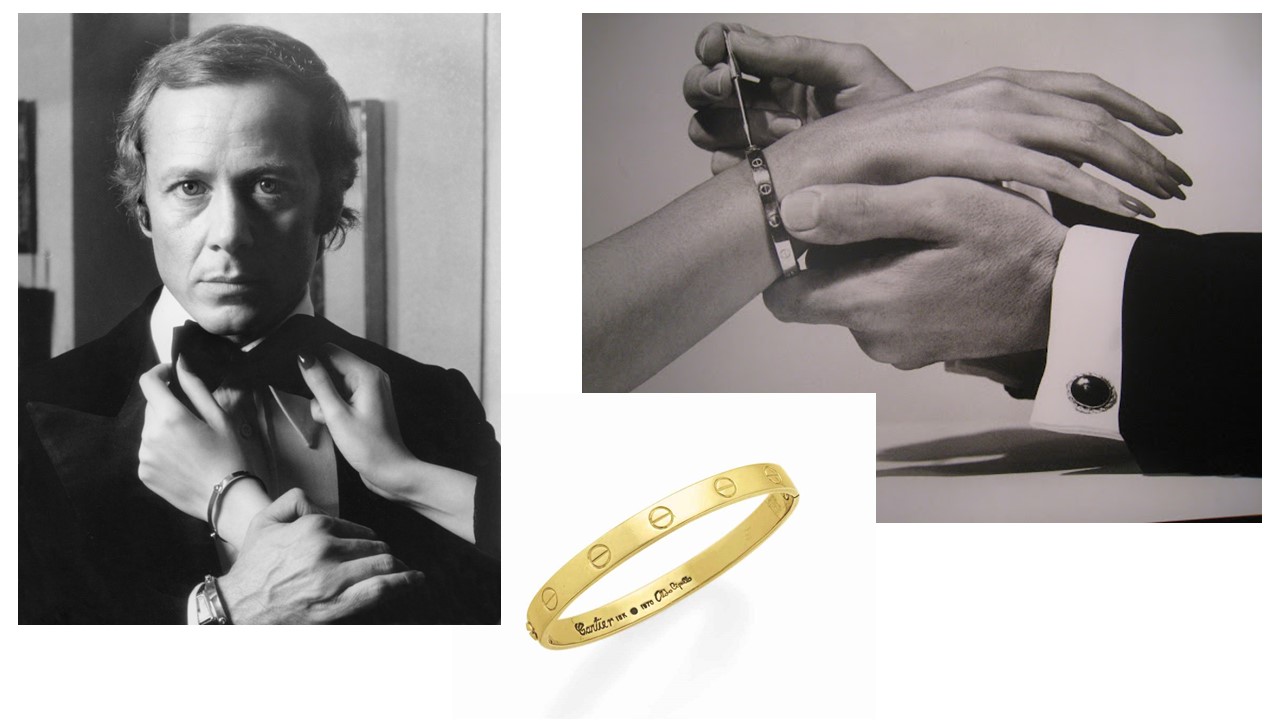
Cartier initially intended these bracelets just to be available in pairs for lovers. To reiterate this romantic message, Cartier gifted 25 sets to high profile couples. The Duke and Duchess of Windsor, Steve McQueen and Ali McGraw and even Elizabeth Taylor and Richard Burton all received pairs of Love bracelets. The celebrity endorsement of this sentimental jewel helped create the mass desirability the bracelet is associated with today, if not necessarily for its original message of commitment.
These sentimental jewels, imbedded with a particular meaning, created unique marketing opportunities for jewellers across the centuries and continue to be widely collected in the second-hand market. The principles of their messages are as true today as they were centuries ago- love, devotion, remembrance - and their legacy could provide inspiration for contemporary designers.
Video: Sarah's webinar replay 'Sentimental Jewellery, from the antique to the present, and its importance in these times'
Find a Jeweller
Are you looking for a local jeweller that is able to understand your sentiments?
Find a Jeweller
Source: Sarah Duncan