The NAJ Celebrates International Women's Day 2026
02 Mar 2026
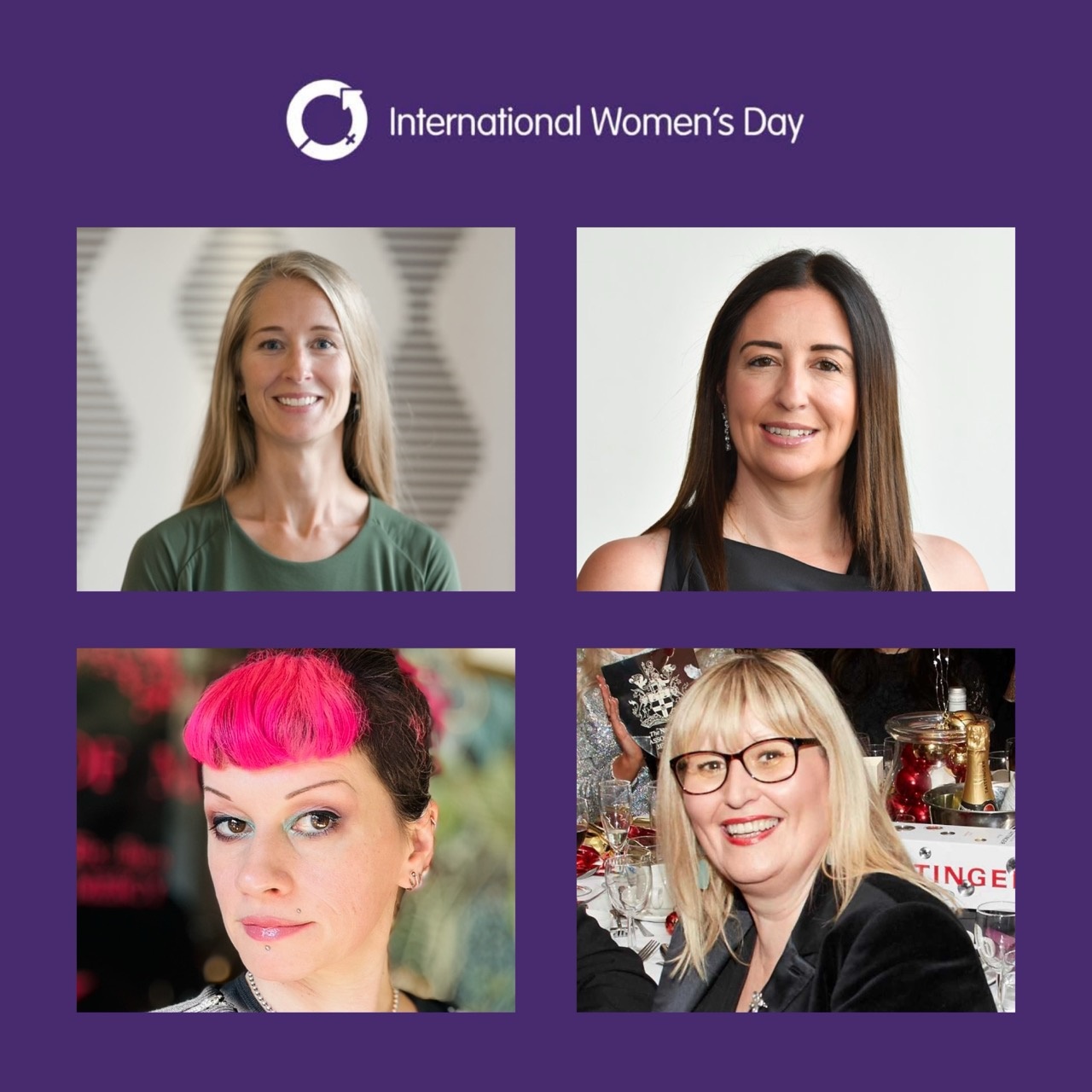
International Women's Day (IWD) has existed for over a hundred years, as have many of the issues still impacting women's advancement. Since 1911, IWD has belonged to all who care about gender equality.
The theme for IWD 2026 is ‘Give To Gain’ – a campaign aimed to encourage “a mindset of generosity and collaboration”. The message: “Give To Gain emphasizes the power of reciprocity and support. Giving is… intentional multiplication. When women thrive, we all rise… contributing to women's advancement helps create a more supportive and interconnected world.”
We speak to four influential women in the jewellery world to discover whether gender equality is an issue that needs to be addressed in our industry.
Naomi Newton-Sherlock, Creative Director, Domino Jewellery & Director, Weston Beamor
Q: How much of an issue is gender (in)equality in our industry, whether in the past or now?
The jewellery world has long presented a fascinating paradox. It’s an industry whose primary client base is female, whose emotional language is often centred on women’s lives, and whose creative energy has been strongly influenced by many extraordinary female designers. However, historically, its structures of ownership, finance and formal recognition have been predominantly male. In the UK, as elsewhere, the bench, the boardroom and the buying office have not always reflected the diversity of the talent pool.
That said, the picture is not static. Over the past two decades, I’ve witnessed a meaningful shift. More women are founding businesses, leading design teams, and occupying senior executive positions within heritage brands and trade bodies. There is greater visibility, more mentorship, and, importantly, more open dialogue.
I’m proud to work within a business whose directorate is 50 per cent female and whose management team is comprised of more than 50 per cent women. That balance is intentional rather than incidental; representation at the leadership level meaningfully shapes culture, succession and strategic direction.
We’re also seeing institutional progress. Organisations such as The Goldsmiths' Company are consciously and actively addressing imbalance within the trade by widening access, modernising governance and creating clearer pathways into the profession. Such commitment signals that change is not cosmetic, but structural.
However, inequality is now more nuanced. It can appear in funding disparities for female-led start-ups, in the differential valuation of businesses, or in the persistent assumption that technical authority sits more comfortably with men. The work now is less about entry and more about equity: equal access to capital, recognition, and long-term leadership influence.
Q: Has being a woman impacted your career (positively or negatively)?
Undoubtedly. Jewellery is deeply intertwined with identity and emotion; being a woman has given me an intrinsic understanding of the end wearer’s perspective. That emotional literacy is commercially and creatively valuable.
Earlier in my career, however, I sometimes found that authority had to be demonstrated more emphatically. Technical and strategic competence were sometimes interrogated more rigorously than those of male counterparts. Ultimately, the experience cultivated resilience and precision, qualities that serve any leader well.
Q: Have you ever had to call out gender inequality (for yourself or for someone else)?
Yes, though I believe such moments are best handled with calm authority. There have been instances where assumptions were made about authorship, leadership or decision-making. Addressing those clearly, and without hostility, is essential.
Progress is rarely achieved through rhetoric alone; it is secured through consistent action. Calling out inequality need not be confrontational, but it must be clear. Silence, too often, has been the enabler of imbalance.
When one occupies a position of influence, it becomes incumbent to use it constructively. Ensuring equitable pay, proper credit, and visible opportunities for others is part of responsible leadership.
Q: The IWD theme this year is “Give to Gain,” focused on forging gender equality and funding for women’s charities. Do you support this theme, and if you were to donate/promote, which charity would you choose?
I do. ‘Give to Gain’ recognises a truth our industry understands well: value is created through investment. Whether in craftsmanship, design education, or emerging talent, what we fund shapes what flourishes.
In our industry, giving time, knowledge, and support can be as transformative as financial funding. I, for example, am Master to my apprentice, Sofie – a four-year commitment that extends beyond technical training to stewardship of craft, discipline and confidence; I volunteer on several schemes supporting emerging talent, including recently acting as mentor to the incredible Genevieve Schwartz; and for the past two years I’ve been part of the advisory panel to the Wardens of The Goldsmiths' Company.
These roles are not ceremonial; they are substantive. They shape careers, open networks, and build resilience. ‘Give to Gain’ is not simply philanthropic; it is strategic. When we invest in women, we expand the industry’s intellectual, creative and commercial future, strengthening the entire ecosystem in which we operate. Equality is not an act of generosity; it’s an act of good governance. We cannot sit on the sidelines and wait for others to deliver the change we want to see.
Ruth Faulkner, managing editor, Retail Jeweller
Q: How much of an issue is gender (in)equality in our industry, whether in the past or now?
The jewellery industry has always had strong female representation, particularly across design and increasingly across retail and brand leadership, which is something to celebrate. At the same time, like many industries with a long heritage, senior decision-making roles have not always reflected the full diversity of the talent within them. From what I see today, there is genuine progress being made. Through my role on the Council of the Goldsmiths’ Craft & Design Council, which exists to champion excellence across goldsmithing, silversmithing and jewellery design, I see extraordinary talent coming through at all levels. The focus now feels less about identifying inequality and more about ensuring opportunity, visibility and progression are consistently available to everyone.
Q: Has being a woman impacted your career (positively or negatively)?
I’ve been fortunate to work in sectors where women are highly visible; both journalism and jewellery have strong female voices. I’ve always felt judged more on the quality of my work and my contribution to the industry than anything else. If anything, being part of an industry with such a strong female customer base and workforce gives you a particular perspective and understanding of the market. But ultimately, I think career progression comes down to professionalism, relationships, and consistently delivering value.
Q: Have you ever had to call out gender inequality (for yourself or for someone else)?
In my position, I tend to approach things through constructive encouragement rather than confrontation. If representation on a panel or in a conversation feels narrow, I’ll usually suggest broadening the mix of voices. Often it’s simply a case of oversight rather than intent. Mentoring has also shaped my perspective. I act as a career mentor for the University of Exeter and support one or two students each year who are looking to enter journalism, PR or communications. Those conversations remind me how important visibility and encouragement are, and sometimes the most effective way to address imbalance is simply to open doors and share experience.
Q: The IWD theme this year is “Give to Gain”, focused on forging gender equality and funding for women’s charities. Do you support this theme, and if you were to donate/promote, which charity would you choose?
I do think “Give to Gain” is a thoughtful theme. Investing in women, whether through education, mentorship or charitable support, has a multiplier effect. It strengthens businesses, industries and communities. Given my involvement in mentoring and in championing craft excellence through the Goldsmiths’ Craft & Design Council, I’m particularly drawn to initiatives that support education, skills development and confidence-building for young women. Charities that help create access to opportunity, whether through scholarships, career development or enterprise support, tend to deliver long-term impact, and that feels especially meaningful.
Sally Leonard, Pendeloque Consulting
Q: How much of an issue is gender (in)equality in our industry, whether in the past or now?
Over my 25+ years in the industry, I can see that things have improved, but there is still gender disparity. We don’t see as many women in more prominent positions outside those that relate more to craft, and certainly fewer in positions of prominence within strategy and commerce. Events and meetings are still dominated by men, but I am encouraged by the actions some organisations have taken to redress this balance, and I’m hopeful that the industry of the future will fully represent everyone who works within it.
The meetings and events I attend are slowly becoming more diverse, bit by bit, which is genuinely encouraging. I also see a number of community groups and organisations initiated by women to support one another, which I think is fantastic. There's progress, but there is still work to do.
Q: Has being a woman impacted your career (positively or negatively)?
This is a difficult question to answer, as you’re never really sure how life would be if you were different!
I do feel that, as a rule, we often have to work harder to be seen and heard as women. There are certainly incidents I can recall in the past where I’m sure I would have been treated differently if I were a man, but I don’t let that stop me!
The evidence shows that women are just as capable as men, and that workplaces and industries with an inclusive mix of people – from different ethnicities, genders and backgrounds – are stronger and perform better.
There are also systemic issues that aren’t unique to our industry. One of the biggest challenges many women face is the disproportionate responsibility for children, childcare and the associated mental load. Even in households where both partners work full-time, women often carry the invisible planning, organising and emotional labour that keeps family life functioning. The structure of society as it stands still relies heavily on women undertaking the majority of unpaid work, and without more women in positions of influence and decision-making, that imbalance is unlikely to shift. That said, I’m cautiously optimistic that the dial is slowly moving towards something more equitable.
Q: Have you ever had to call out gender inequality (for yourself or for someone else)?
Oh, yes. It’s not always obvious – sometimes it’s more subtle. I don’t personally have any issue calling out behaviour whenever I see it, and I have done so on behalf of others as well as myself in the past.
I don’t believe any form of discrimination should be allowed to pass without being addressed. Sometimes people need to understand the impact of their words or actions – and that requires an open, constructive conversation about why that behaviour isn’t acceptable.
Q: The IWD theme this year is ‘Give to Gain’, focused on forging gender equity and funding for women’s charities. Do you support this theme and, if you were to donate or promote, which charity would you choose?
I absolutely support this theme. Equity recognises that not everyone starts from the same place, and that treating people the same does not automatically create fair outcomes. For me, that distinction really matters. If we are serious about meaningful progress, we have to invest in organisations that are actively working to remove structural barriers and create genuine opportunity.
I particularly admire the ethos of the Young Women’s Trust. Supporting young women at the start of their working lives – especially those facing economic disadvantage – feels like one of the most practical and powerful ways to shift the dial. If we want a fairer future, we need to ensure the next generation has the confidence, support and financial independence to build it.
Carol Sinfield, Founder, The Carol Sinfield Agency
Q: How much of an issue is gender (in)equality in our industry, whether in the past or now?
I think in the past there was inequality. When I started working in jewellery shops, the store managers were always men, with women who often had the same abilities being overlooked. Thankfully, I am happy to say that as my experience grew, this doesn’t happen anymore.
Q: Has being a woman impacted your career (positively or negatively)?
Once I migrated to wholesale from retail, I think being a woman helped my career progression, as jewellery wholesale is very male-dominated. If you think of it logically, who is better placed to sell jewellery than a jewellery-obsessed woman?
Q: Have you ever had to call out gender inequality (for yourself or for someone else)?
Thankfully, never, but I have always heard stories over the years of discrimination over salary and benefits. As this is a topic that is rarely discussed, I wouldn’t know if I have ever fallen foul of the pay gap.
Q: The IWD theme this year is ‘Give to Gain’, focused on forging gender equity and funding for women’s charities. Do you support this theme and, if you were to donate or promote, which charity would you choose?
Absolutely. I think this theme is very important, particularly for countries where women are still seen as second-class citizens.
Source: National Association of Jewellers